Paul Rand - Transformed American design. | B4F #37
Category
News
Date
Duration
3 Minutes

In this new episode of Brand for Future, we travel to Brooklyn in 1914 to meet a boy who started painting signs for his father's store and ended up redefining how the business world understands design. His birth name was Peretz Rosenbaum, but he is better known as Paul Rand, the man who transformed graphic design into a strategic tool and elevated the profession to an intellectual category.
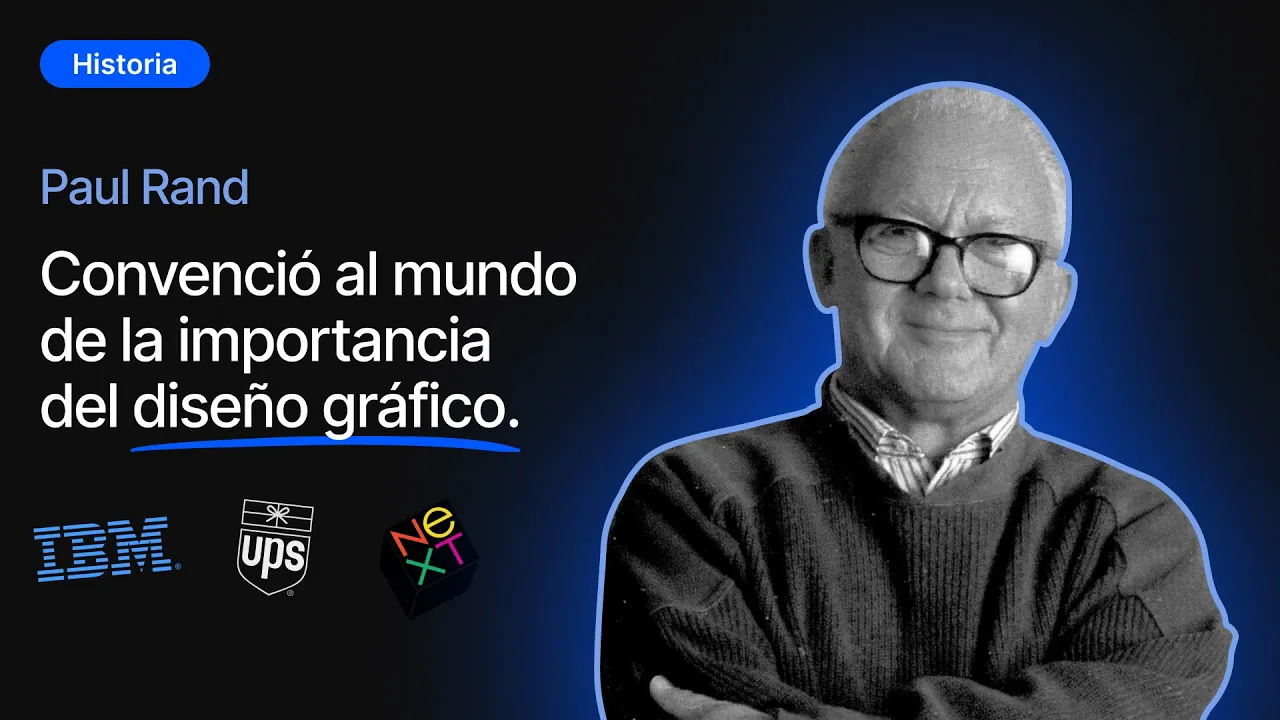
Rand didn’t just design logos; he created visual thinking systems. From IBM to ABC, through UPS and NeXT — the company Steve Jobs ran before returning to Apple — each of his corporate identities became a lesson in simplicity, functionality, and coherence. He argued that good design should not be decorative but inevitably beautiful, as it solved a real problem.
His book Thoughts on Design (1947) represented a silent revolution. In it, he made clear that form and function are not enemies but two sides of the same coin. For Rand, design was philosophy and craft, poetry and business. And that combination, that of the poet and the executive, is perhaps his most enduring legacy.
In this episode, we explore his life journey: from late nights studying at the Pratt Institute to his academic impact at Yale, through conflicts with his father and conversations with Steve Jobs. It is the story of how a young Jewish boy from Brooklyn defined the visual aspect of 20th-century capitalism and taught us that "design is the ability to know what to eliminate and what to keep".
🎙️ Listen to the full episode of Brands 4 Future and discover how Paul Rand turned his own name into a brand and design into a way of thinking.
‹ Challenges for raising funding in Healthtech in 2026
The importance of storytelling in branding: building emotional connections that transform brands ›


