José Aparicio on "La Tarde de Telemadrid": Why do we buy what we buy?
Category
News
Date
Duration
2 Minutes
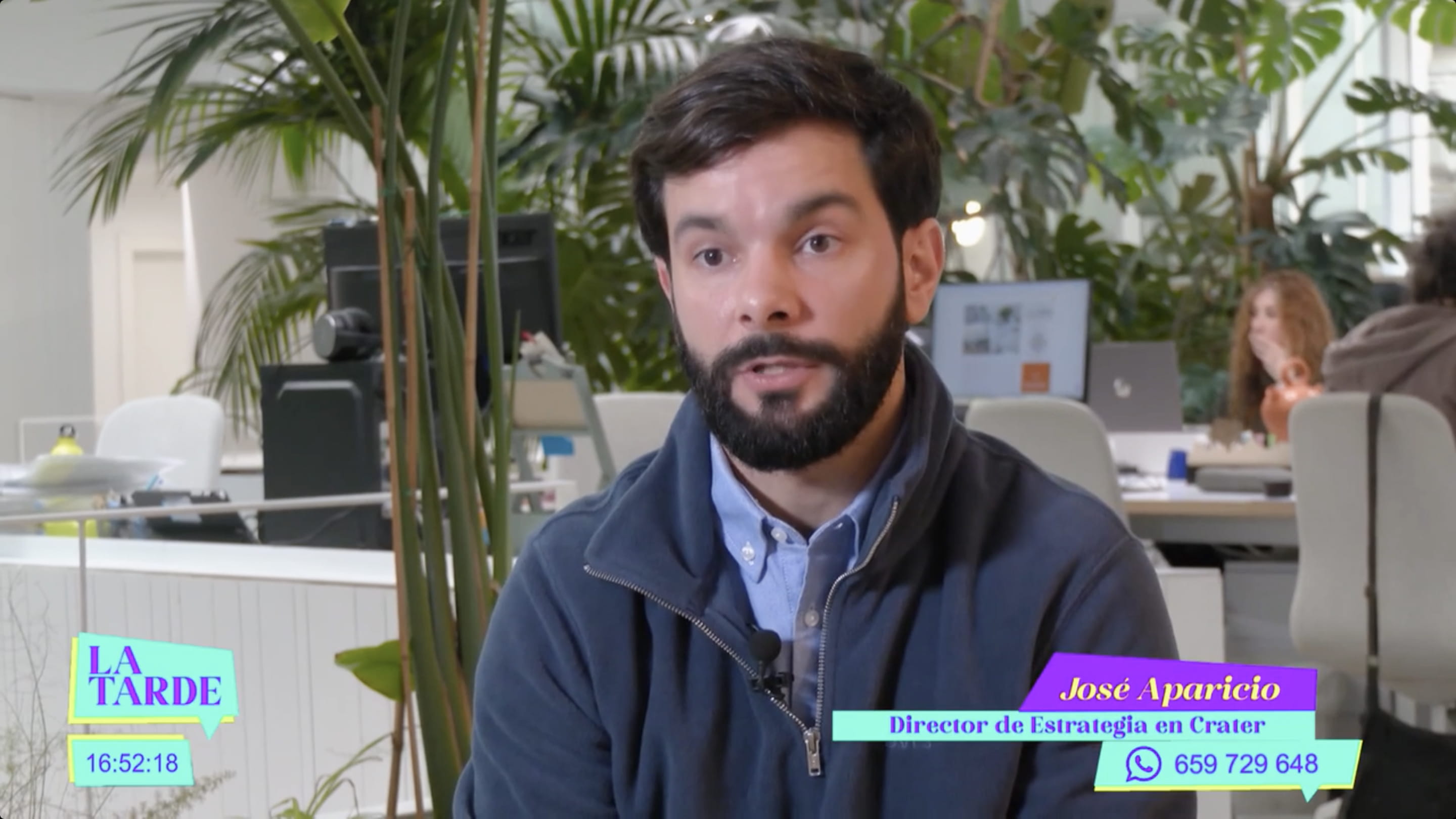
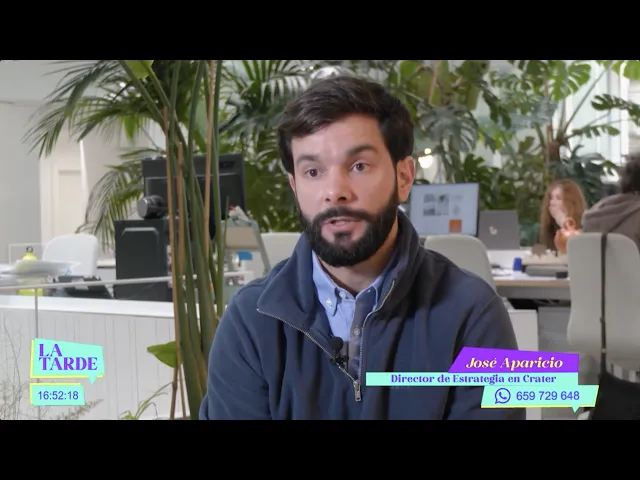
Have you ever gone to a vending machine for a coffee and come back with your hands full of snacks and sweets? You're not alone, and it's no coincidence. José Aparicio, founding partner of Crater and strategy director, appeared on 4 February on the programme La Tarde de Telemadrid to explain the psychological and marketing mechanisms behind every impulsive purchase from a vending machine.
A new regulation that changes the rules of the game
Aparicio's appearance comes at a key moment, as the Spanish Government has introduced a Royal Decree requiring that at least 80% of the products available in hospital, care home and workplace vending machines be healthy. The regulation requires products such as water, fresh fruit, non-fried nuts, yoghurts with no added sugar and wholemeal bread to occupy the main space in vending machines, while ultra-processed products (industrial pastries, savoury snacks and sugary drinks) are relegated to the less visible rows. In addition, hot drinks will be dispensed without sugar by default, with an optional maximum of five grams. In Spain there are more than 390,000 food and drink vending machines, and consumption of ultra-processed foods has tripled over the last two decades, rising from 11% to 32%.
Impulse buying: when the brain decides before you do
During his presentation, Aparicio explained how impulse buying works, that is, that moment when we buy a product without having planned to and even without needing it. The vast majority of the decisions we make every day are linked more to emotion and instinct than to reason. Our brain makes the decision first and then justifies it rationally so that we feel comfortable with the choice. In fact, according to neuromarketing research, as many as 95% of purchase decisions take place at a subconscious level.
The factors that lead us to buy
Aparicio identified several strategic elements that influence consumer behaviour in front of a vending machine:
The machine's location: its placement in transit or waiting areas makes spontaneous purchases easier.
Affordable price: the cost of the product should not be perceived as a barrier, but as relatively inexpensive.
Attractive packaging: the packaging design appeals directly to our emotions and senses.
Ease of payment: cash payment, contactless card payment or payment with a mobile phone removes any friction.
The position of the product inside the machine is, according to Aparicio, the most decisive factor. Anything displayed at eye level, in the centre of the machine, is bought one time in two.
The reason why a particular product occupies that privileged position is due to a purely commercial logic: the gross profit margin on pastries, snacks and vending drinks is between 40% and 60%. Brands know these dynamics and exploit them to maximise their sales.
In the end, as Aparicio explained on the programme, what really leads us to buy from a vending machine is something as simple — and as powerful — as the fact that the product is there.
‹ Don Norman - Invented the term "User Experience". | B4F #38
Double recognition of Crater at the Anuaria Awards 2025 ›