Cristóbal Balenciaga - A tailor in the true sense of the word
Category
News
Date
Duration
3 Minutes
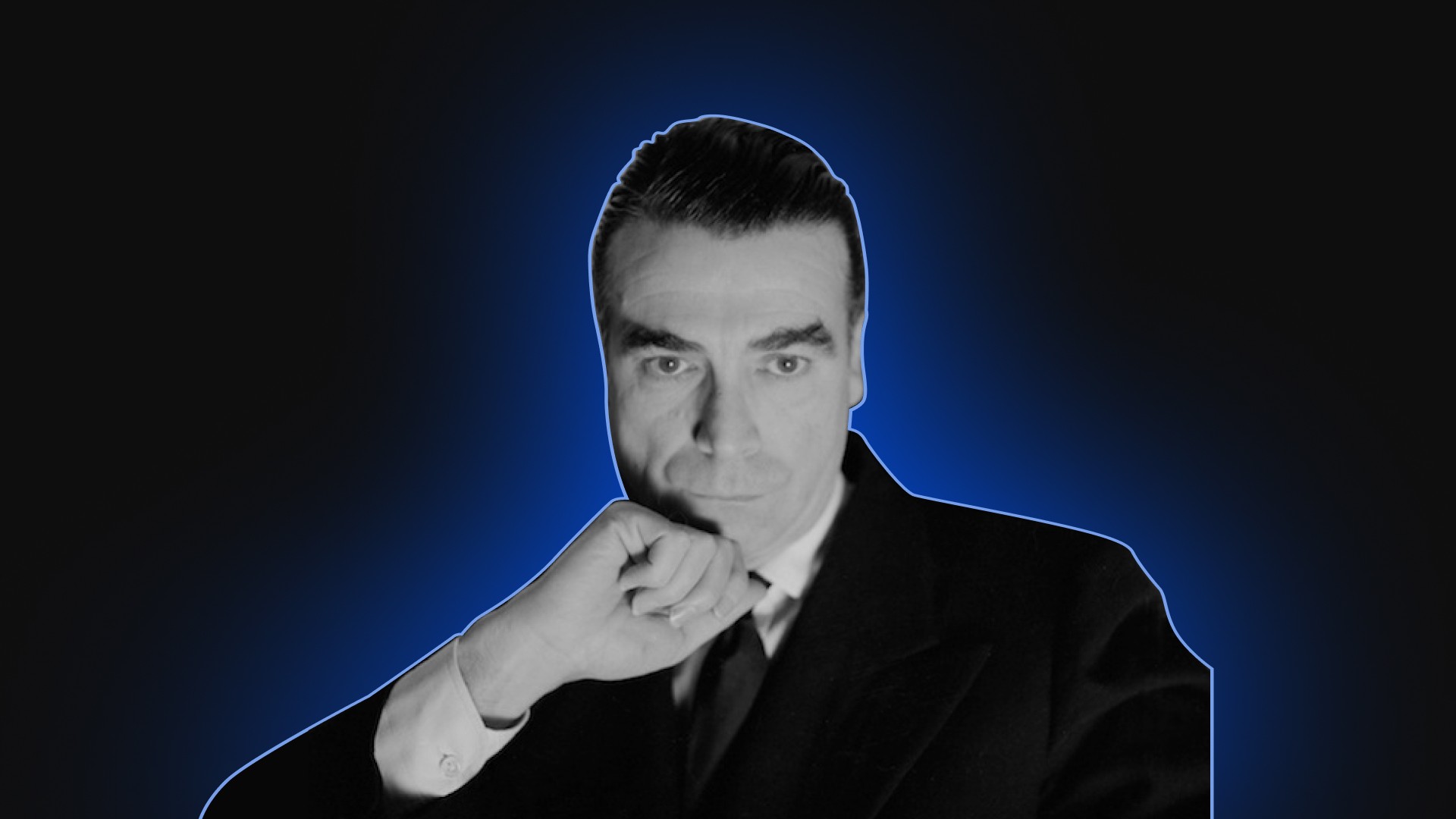
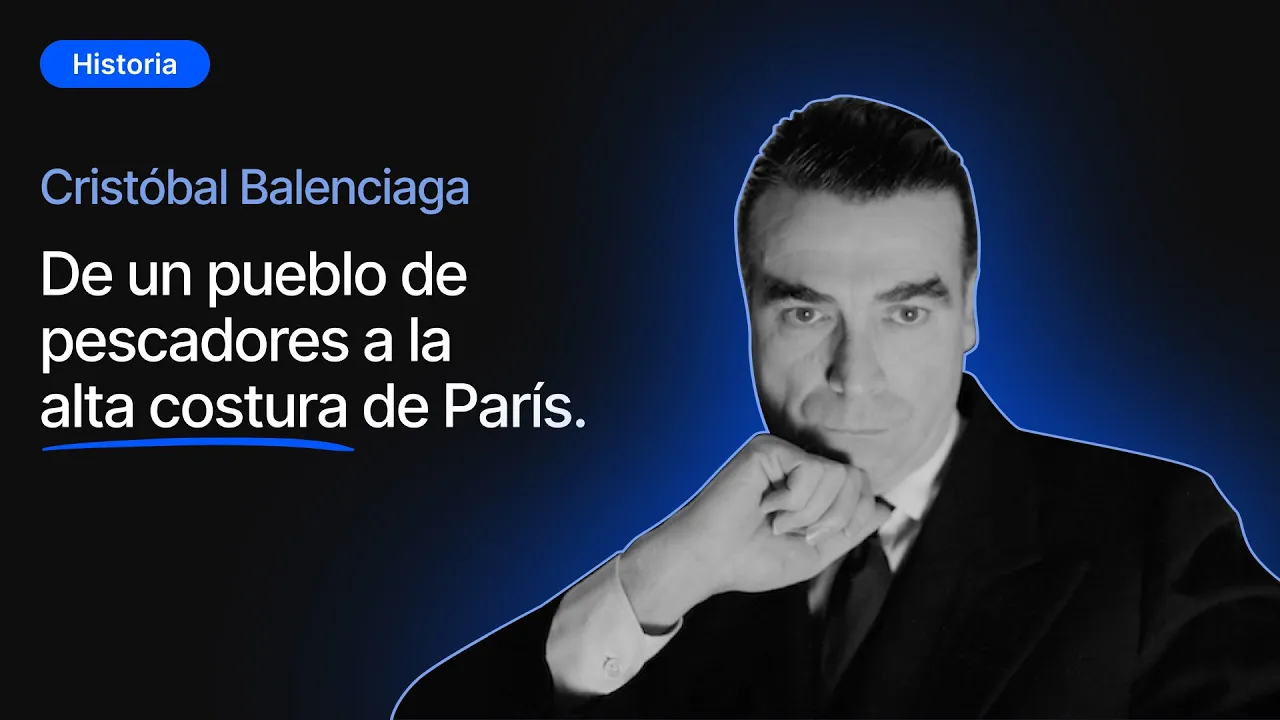
Cristóbal Balenciaga: From a fishing village, to Parisian haute couture.
There are stories that deserve to be told slowly, with the same delicacy with which Cristóbal Balenciaga cut his fabrics. And if there is one thing we love at Brands 4 Future, it is diving into the biographies of those people who did not just excel in their profession, but completely transformed it. People who, from seemingly impossible places, managed to change the world.
Cristóbal Balenciaga is precisely that: a Basque fisherman who became the king of Parisian haute couture. A man of whom Christian Dior said was "the master of us all" and whom Coco Chanel recognised as "the only couturier in the true sense of the word". But his story goes far beyond these accolades. It is the story of an extraordinarily reserved genius who experienced emigration, homosexuality in the society of 100 years ago, and who built a design philosophy that continues to inspire designers all over the world.
A childhood shaped by the sea and sewing
In our latest episode of Brands 4 Future, we journey through Cristóbal's life from his most humble origins. Born in 1895 in Getaria, a small fishing village in Gipuzkoa, his childhood was spent between the smell of saltpetre from the Cantabrian Sea and his mother's sewing workshop. Martina Izaguirre worked for the aristocratic families who summered in the area, and it was precisely thanks to her that the young Cristóbal had his first contact with high society.
The story of how the Marchioness of Casa Torres challenged him to copy one of her most exclusive dresses when he was barely a child is, quite simply, fascinating. And he did it. The Marchioness wore that dress to mass the following Sunday, proving that the boy had something special. It was only the beginning.
From the Basque Country to Paris: a story of overcoming adversity
What makes this biography so passionate is precisely its complexity. We are not looking at a simple "poor boy makes good in Paris". We are looking at a life marked by the premature death of his father at sea, the Spanish Civil War which forced him to close his businesses in San Sebastián, Madrid and Barcelona, and a highly risky decision: to move to Paris in the middle of the war to compete with Chanel and Dior on their own turf.
In the episode, we explore how he arrived in the French capital not as a refugee, but as a businessman who had carefully studied his strategy. How he chose to open his couture house at number 10 Avenue George V, between Dior and Schiaparelli, on the golden mile of haute couture. And how he designed a minimalist space, free of distractions, where only the clothes spoke.
Creations that changed fashion forever
Balenciaga did not follow the trends of French fashion. He created them. The Infanta dress inspired by Velázquez, the barrel line that defied the corset, the Baby Doll, the sack dress, the balloon skirts... Each of his creations was a statement of principles. And in the podcast, we analyse in depth how his designs progressively eased the way women dressed, freeing them from the need to have several people to help them put on an outfit.
But we also talk about the personal tragedies that marked his work. The death of Wladzio d'Attainville, his life partner, in 1948, led Balenciaga to present an entirely black collection that transformed mourning black into a symbol of elegance. It was a private tribute that became a public revolution.
An extraordinarily discreet private life
One of the things that most fascinates us about Balenciaga is his reserved character. In more than three decades of career, he only granted one interview. He lived his homosexuality at a time when this was a social stigma. And despite dressing the most elegant women in the world — Marlene Dietrich, Grace Kelly, Jackie Kennedy, Ava Gardner — he always maintained a low profile, letting his work speak for him.
In the episode, we also explore his relationship with Ramón Esparza, his second and final partner, who accompanied him for 25 years and who, after his death, kept his legacy alive by organising exhibitions all over the world.
A legacy that lives on
Balenciaga closed his couture houses in 1968, in the midst of the French May revolution and with the arrival of prêt-à-porter. He did not want to adapt to a fashion that he considered contrary to his artisanal philosophy. But his influence did not end there. Disciples like Hubert de Givenchy or Óscar de la Renta continued his tradition, and today his work continues to be exhibited in the most prestigious museums in the world.
In 2011, the Cristóbal Balenciaga Museum was opened in Getaria, that fishing village where it all began. A place we recommend visiting to anyone who wants to understand the magnitude of his work.
Why listen to this episode?
If you are passionate about design, fashion, stories of overcoming adversity or simply want to know about the life of one of the most important creative geniuses of the 20th century, this episode is for you. At Brands 4 Future, we have set out to tell stories with depth, with socio-cultural context, with anecdotes that humanise the big names and allow us to understand not only what they did, but why they did it.
The story of Cristóbal Balenciaga is the story of someone who never stopped being true to his principles, who understood fashion as architecture, as painting, as music, as philosophy. Someone who said that "a couturier must be an architect for plans, a sculptor for shapes, an artist for colour, a musician for harmony and a philosopher for temperance".
And that is exactly what he was.
Listen to the full episode here: Cristóbal Balenciaga - A couturier in the true sense of the word | B4F #32
‹ How we apply AI in creative work. Crater®
Competitor analysis: a comprehensive guide to market research and strategic planning ›


