Alan Turing - Laid the foundations of computing and Artificial Intelligence
Category
News
Date
Duration
3 Minutes
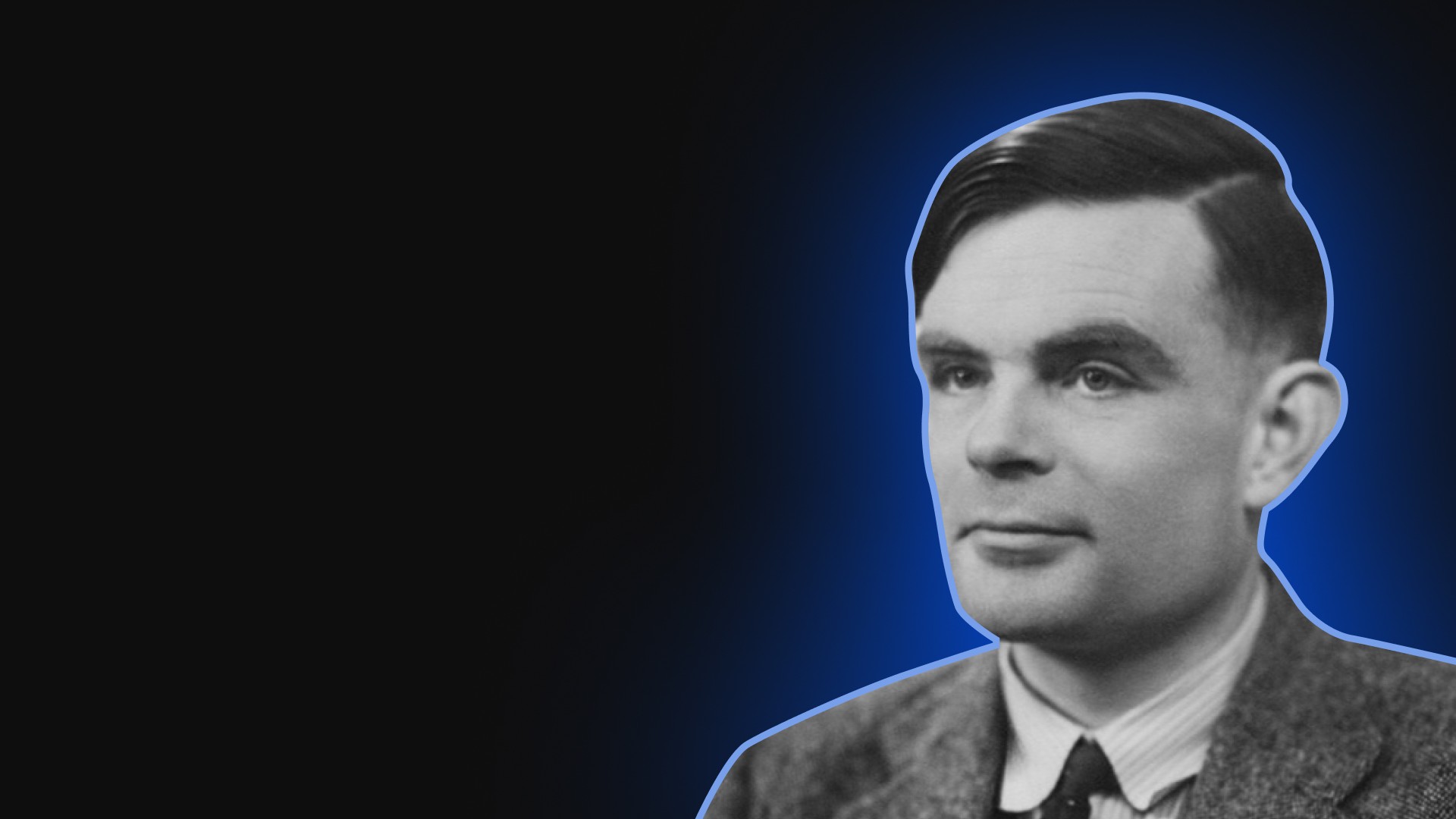
Can you imagine designing the computers of the future when the word "computing" didn't even exist? Saving millions of lives by deciphering Nazi codes, only to be persecuted and punished by your own country? The story of Alan Turing is as fascinating as it is heartbreaking, and in the new episode of Brands 4 Future, we take you through every moment of a life that changed the world forever.
A brilliant mind in dark times
Alan Turing was no ordinary genius. From childhood he showed a supernatural capacity for logical reasoning that made him a misfit in the British educational system of the time. In a world obsessed with Victorian values and tradition, Turing represented the exact opposite: pure originality, independent thought and a vision of the future that no one else could comprehend.
In our episode, we explore how a 24-year-old boy, in 1936, laid the theoretical foundations of all modern computing with his concept of the Turing Machine. Think about this: computers didn't exist, the word "computer" didn't even exist in the modern sense, and this young mathematician was imagining devices capable of executing any algorithmic operation. He was seeing ChatGPT before anyone even knew what a pixel was.
The war hero that nobody could know
World War II catapulted Turing to the centre of one of the most secret intelligence operations in history. At Bletchley Park, a Victorian mansion converted into the nerve centre of British espionage, Turing led the development of the Bombe, an electromechanical machine designed to decipher Enigma, the Nazi encryption system that seemed invulnerable.
Historians estimate that Turing's work shortened the war by at least two years and saved millions of lives. However, all of this remained in absolute secrecy for decades. The man who probably saved more lives than any general was unable to receive public recognition for his heroism.
In the episode, we tell you incredible anecdotes from this time: how he chained his teacup to the radiator so it wouldn't be stolen, how he used a makeshift gas mask to fight his allergies during his bike rides, and how he ran 65 kilometres from Bletchley Park to London just to attend meetings. Turing was eccentric, obsessive and absolutely brilliant.
From triumph to tragedy
After the war, Turing continued to revolutionise the world. In 1950 he published one of his most influential articles: "Computing Machinery and Intelligence", where he raised the famous question: can machines think? His answer was the Turing Test, a test that transformed a metaphysical question into a practical and measurable problem, anticipating technologies like ChatGPT by 73 years.
But Turing's story is also a story of deep injustice. In 1952, after reporting a burglary at his home, the police discovered his relationship with another man. He was arrested, prosecuted and convicted under the "gross indecency" laws of the time. He was given the choice between prison or chemical castration. He chose the hormonal treatment, which had devastating effects on his physical and mental health.
On 8 June 1954, Turing's housekeeper found him dead next to a partially eaten apple poisoned with cyanide. He was only 41 years old. The man who had saved Europe from Nazi tyranny was treated as a criminal simply for being who he was.
A legacy that surrounds us
Every time you unlock your smartphone, use a computer, talk to an artificial intelligence or drive a car with autonomous systems, you are using technology that exists thanks to the ideas of Alan Turing. His story is that of a misunderstood visionary, a forgotten hero and a victim of intolerance.
In this episode of Brands 4 Future, we travel through every stage of his life: from his lonely childhood in British boarding schools, through his revolutionary years at Cambridge and Princeton, his secret work during the war, his pioneering contributions to artificial intelligence and mathematical biology, to the tragic end that should never have happened.
Do not miss this story of genius, courage, injustice and posthumous redemption. Listen to the full episode here and discover why Alan Turing is one of the most important minds of the 20th century and how his legacy lives on in every aspect of our digital age.
‹ We will deliver a talk on gamification | INESE Marketing 2025
Analysis of competitive marketing strategies to stand out in the market ›


